
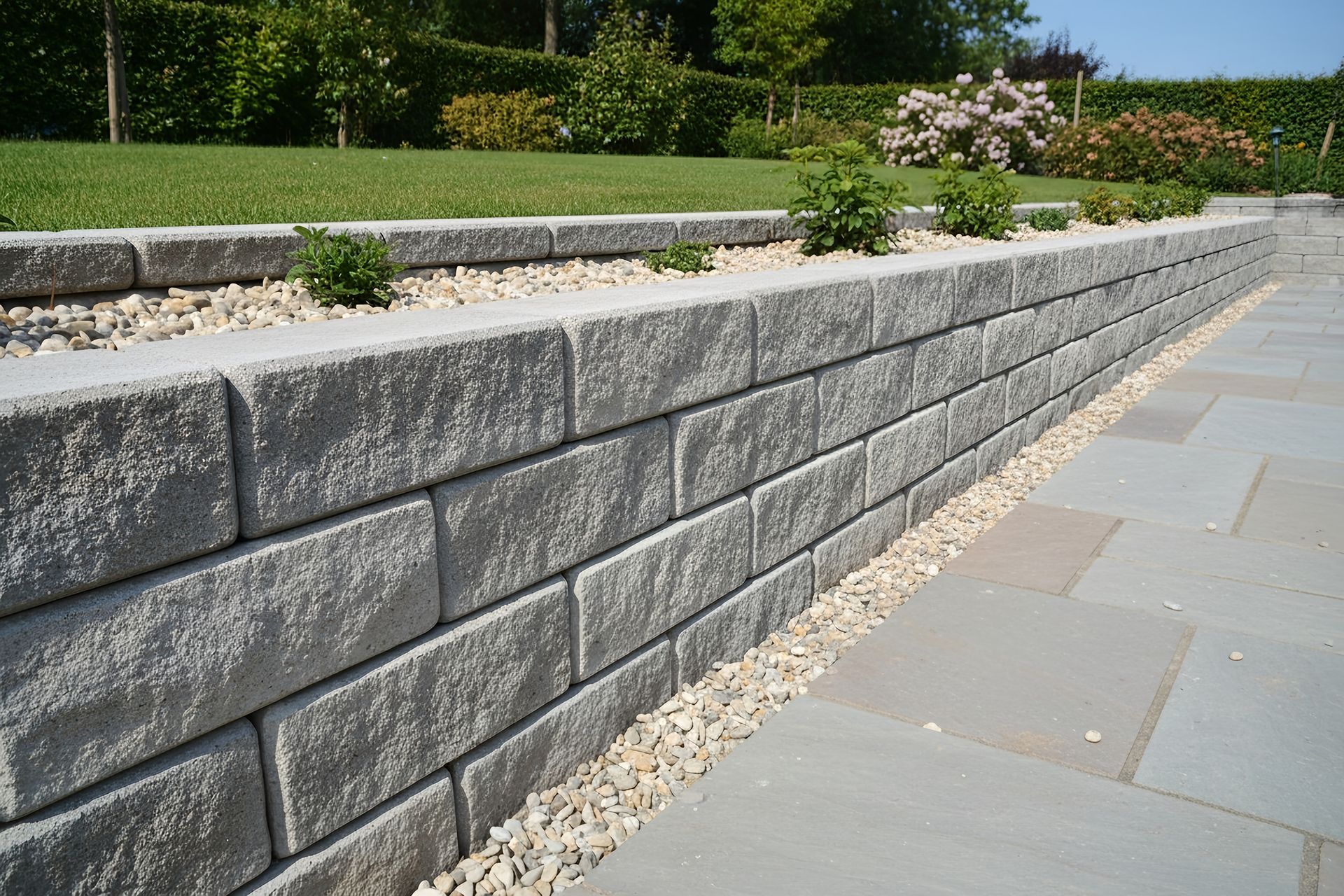
Retaining Walls Built to Hold Sloped Terrain
Concrete Retaining in Gallatin for properties with erosion concerns, drainage problems, or sloped landscapes requiring structural support
Sloped terrain without retaining support allows soil to wash downhill during heavy rainfall, creating uneven grade and exposing tree roots or foundation edges. Concrete Experts in TN LLC installs concrete retaining walls that hold soil in place, redirect water runoff, and create level outdoor spaces where slopes previously limited usability. Retaining walls function by resisting lateral soil pressure through mass and reinforcement, preventing the gradual soil movement that undermines landscaping and structures.
Installation begins with excavation and grading to establish a stable footing base, followed by forming, steel placement, and concrete pouring to build the wall structure. Drainage systems behind the wall, including gravel backfill and weep holes, prevent water pressure buildup that would otherwise push the wall forward over time.
Arrange an on-site evaluation to review slope conditions and determine wall height and drainage requirements.
What Retaining Walls Prevent Over Time
Retaining walls interrupt the natural downhill movement of soil caused by gravity, water flow, and freeze-thaw cycles. Steel reinforcement inside the concrete resists bending forces generated by tons of soil pressing against the back of the wall. The footing at the wall base provides anchorage, while the wall thickness and reinforcement pattern are calculated based on retained soil height and load conditions.
After installation, the slope behind the wall remains stable even during storms, and the grade in front of the wall provides usable flat space for patios, walkways, or driveways. Water exits through weep holes rather than pooling behind the wall, and the concrete surface remains plumb without leaning or cracking. Property appearance changes from eroded hillside to structured outdoor space with defined elevation transitions.
Retaining walls above three to four feet typically require engineering approval to confirm the design handles soil pressure and drainage conditions safely, while shorter walls follow standard construction practices without stamped plans. Walls supporting additional loads, such as driveways or structures built above the retained soil, require thicker sections and deeper footings than walls holding landscape beds alone.
Common Questions About Retaining Wall Installation
Retaining walls are a permanent structural addition that affects drainage, grading, and property function, so understanding the factors that influence design helps ensure the wall performs as needed.
What causes retaining walls to fail or lean forward over time?
Inadequate drainage behind the wall allows hydrostatic pressure to build during wet periods, pushing the wall forward, while insufficient footing depth or missing reinforcement reduces the wall's ability to resist lateral loads.
How does soil type in Gallatin affect retaining wall design?
Clay soils retain water and expand when wet, generating higher lateral pressure than sandy or gravelly soils, so walls in clay require more robust drainage systems and thicker sections to handle the increased load.
Why do retaining walls need gravel backfill and weep holes?
Gravel drains water downward quickly instead of allowing it to saturate the soil directly behind the wall, while weep holes provide exit points so water pressure never accumulates against the concrete surface.
When should a retaining wall be curved instead of straight?
Curved walls inherently resist lateral pressure more effectively than straight walls because the curve redirects force along the wall length, making curves advantageous for taller walls or areas with space for the radius.
What finish options work for concrete retaining walls?
Walls can be poured smooth, stamped with texture, or finished with exposed aggregate, and taller walls sometimes incorporate decorative caps or color additives to match surrounding hardscape elements.
Concrete Experts in TN LLC provides retaining wall installation for residential properties and commercial sites throughout Gallatin, Lebanon, and nearby areas with sloped terrain. Contact us to schedule a site assessment and receive a project estimate based on your specific slope and drainage conditions.